AIToolArea
About
Overview
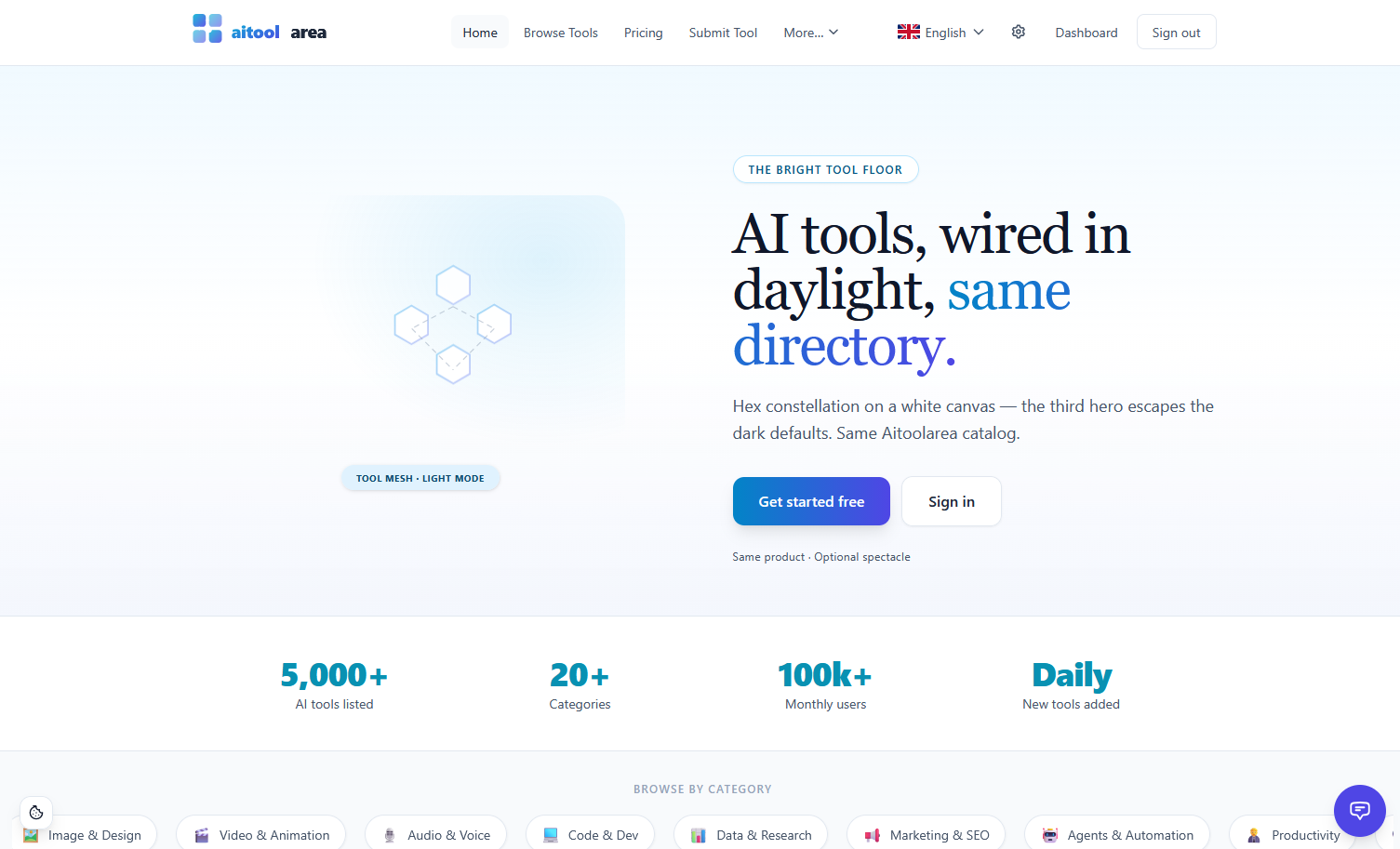
AIToolArea is built for people who are tired of random “top 10 AI tools” posts that all say the same thing. The public site is a discovery engine first: visitors can search by use case, browse by category, and open structured profile pages that answer what a tool actually does, who it is for, how pricing typically works, and which alternatives are worth a look. The layout is intentionally calm and scannable, with clear headings, short feature lists, and plenty of white space so users can compare options without feeling sold to in every paragraph.
What the public experience delivers
- Search- and category-first navigation so high-intent visitors land in the right place from organic search.
- Consistent tool profiles with comparable sections (features, limits, pricing signals, alternatives) so the site feels like a real directory, not a random blog.
- Modular marketing zones for email capture, sponsored placements, and affiliate or partner CTAs as you tune monetization.
- Room for editorial voice such as editor’s picks, seasonal roundups, and (later) community reviews without breaking the template.
- Performance-oriented templates that load fast and work well on mobile, where a large share of research traffic arrives.
Why the information architecture matters
Category hubs create natural landing pages for long-tail queries, while cross-links between related tools help both humans and search engines understand how the space fits together. For an operator, that means the property can work as a pure media play, a lead-generation surface, or a bridge to sponsored listings—funnels are modular and can be rotated as you learn which segments convert. Nothing in the design locks you into a single business model.
Trust is handled through consistency and tone: listings follow a shared template, the default copy reads businesslike, and the experience scales when you add subcategories, regional pages, or new verticals without rebuilding the whole front end.
Analytics, growth, and A/B testing
- Instrument categories and outbound clicks to see which topics drive the most session time and which vendors get the traffic.
- Watch multi-step paths (signups, shortlists, downloads) to find drop-off and test layout or copy.
- Run experiments on CTA placement, comparison modules, and pricing callouts with clear before/after metrics.
- Add accounts or paywalls later if you want to convert anonymous research traffic into a logged-in audience for newsletters or premium data.
Longer-term value
The same information model can power newsletter digests, saved shortlists, and API- or data-oriented partnerships where curated metadata itself becomes the product. Accessibility and performance are part of the implied roadmap: typography stays readable, keyboard users can still navigate category rails, and heavy imagery is not required for the default theme—so the asset ages well as expectations for Core Web Vitals and inclusive design keep rising. Overall, AIToolArea is a turnkey directory and media property: SEO-aware, conversion-aware, and flexible for the next owner’s go-to-market.